
Why You Need Implement OWASP SAMM and DSOMM

Dmytro
Jan 26, 2026
4 min
If you’ve ever tried to "do" Application Security (AppSec) at scale, you know the frustration. You either have high-level policies that developers ignore, or a mess of automated tools that overwhelm everyone with false positives.
To solve this, the OWASP Foundation provides two powerful maturity models: SAMM (Software Assurance Maturity Model) and DSOMM (DevSecOps Maturity Model). While they share the goal of improving security, they operate at different layers of the organization.
OWASP SAMM: The Strategic Blueprint
SAMM is an OWASP Flagship project designed to provide a broad, organization-wide framework for software assurance. It is technology-agnostic and focuses on the "what" and the "why" of security processes.
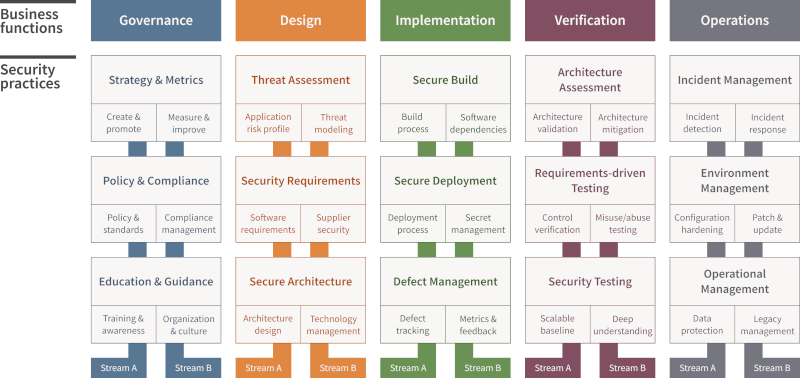
- Structure: It uses a rigid, symmetrical structure of 5 Business Functions (Governance, Design, Implementation, Verification, Operations), each containing 3 Security Practices.
- Target Audience: Security leaders, CISOs, and architects.
- Approach: Top-down. It is used to create a long-term strategy, benchmark performance, and justify security budgets to stakeholders.
- Maturity Levels: 1 to 3 (Ad-hoc to Optimized).
References
OWASP DSOMM: The Technical Roadmap
DSOMM is an OWASP Hands-on project that focuses specifically on how security fits into the "trenches" of a DevOps environment. It is more granular and technical than SAMM, focusing on the "how."
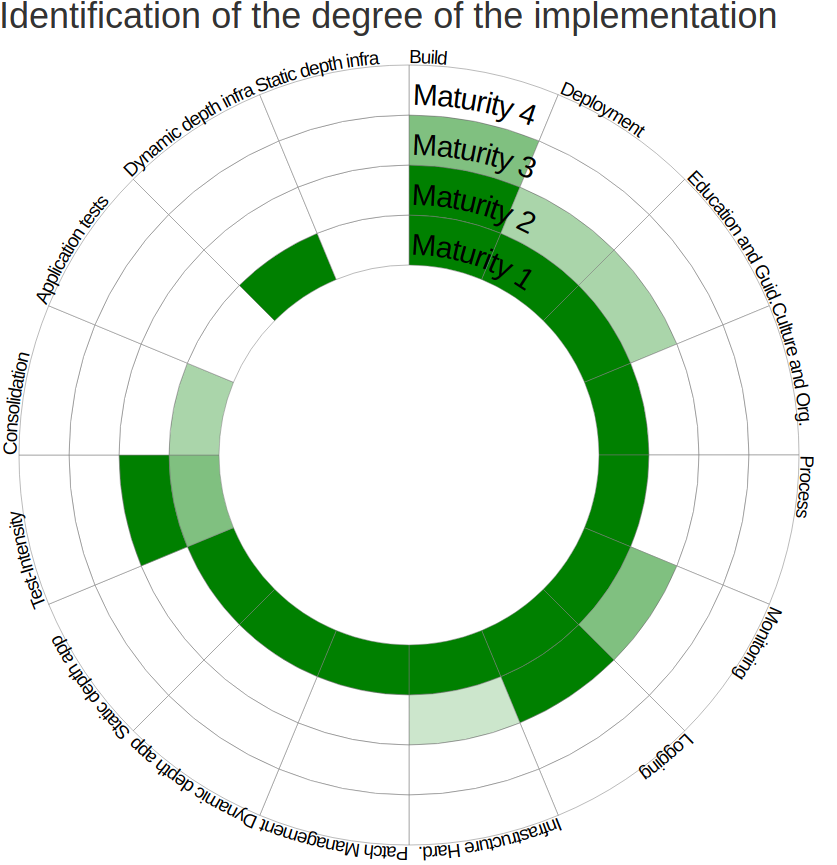
- Structure: Organized into dimensions such as Build & Deployment, Culture, and Implementation. It is asymmetrical – not every category has the same number of maturity levels.
- Target Audience: DevOps engineers, SREs, and technical security architects.
- Approach: Bottom-up. It provides a highly actionable roadmap for technical teams to automate security checks (e.g., secret scanning, IaC analysis) directly into CI/CD pipelines.
- Maturity Levels: 1 to 5, mapping specifically to the depth of DevSecOps integration.
References
A Practical Example: Secret Scanning
To see these differences in action, let’s look at a common nightmare for any business: Leaked Credentials.
The SAMM Approach: Governance and Process
In SAMM, secret scanning is a core part of Implementation within the Secret Management stream. It is addressed as a mature process that an organization should aim for to prevent production leaks.
- When it applies: When you are defining the organizational standard for how secrets should be handled across all stages of deployment.
- The Goal: To ensure developers and deployers never handle sensitive values directly by using automated processes to inject credentials during deployment.
- The Requirement: Implementing periodic checks to detect secrets in code repositories (including full history) and configuration files, ensuring that discovered secrets are revoked and refreshed.
SAMM ensures that the organization has the policy and the mandate to stop credentials from leaking.
The DSOMM Approach: Technical Depth
DSOMM focuses on the immediate technical risks within the Test and Verification dimension. Under the Static Depth for Infrastructure sub-dimension, it identifies secret scanning as a foundational "Level 1" requirement.
- When it applies: During the setup of the CI/CD pipeline and containerization strategy. It is one of the first technical hurdles a team must clear.
- Test for stored secrets in code: Focuses on the risk of secrets being exposed to unauthorized parties via git history or direct code.
- Test for stored secrets in build artifacts: Focuses on the risk of secrets residing in container images or other artifacts. Even if the code is clean, the final build package must be scanned.
Which One Should You Start With?
Choosing a starting point depends entirely on your role and the current maturity of your organization. Because these models solve different problems, the "right" choice is often driven by your immediate objectives.
Start with SAMM if:
- You are building a security program from the ground up and need a structured framework to show progress to stakeholders.
- You need to align different departments (Legal, HR, Engineering) under a single security strategy.
- You want to perform a high-level gap analysis to justify headcount or security tool spending.
Start with DSOMM if:
- You already have a fast-moving DevOps culture and need to "shift left" without slowing down the pipeline.
- You are a technical lead looking for a specific, granular checklist of automation activities.
- You need to improve technical depth in specific areas, such as container security or CI/CD hardening, where general policies aren't enough.
In most successful organizations, the two models meet in the middle. SAMM provides the organizational "North Star," while DSOMM provides the tactical "GPS" for the teams doing the work.